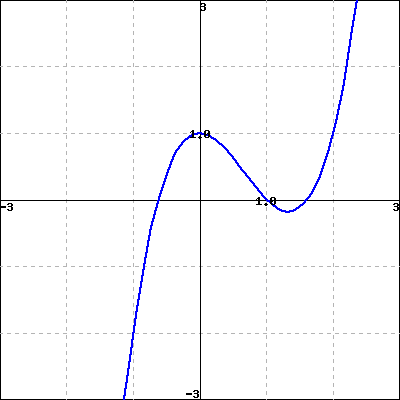
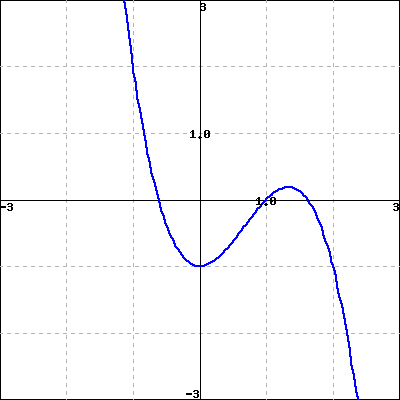
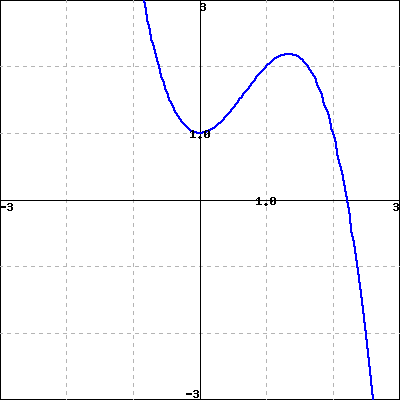
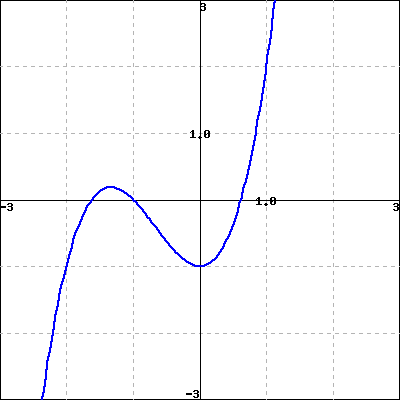
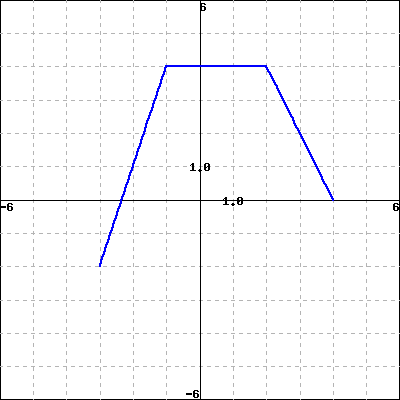
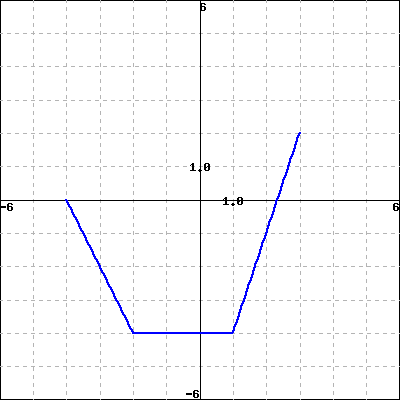
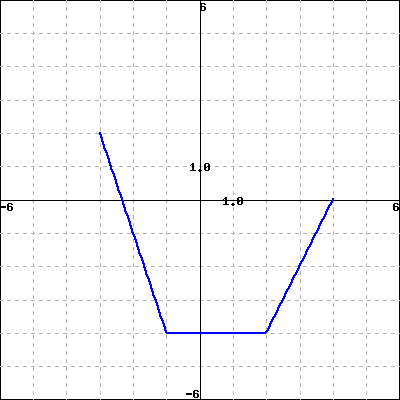
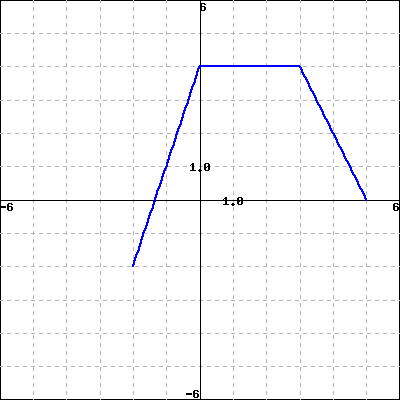
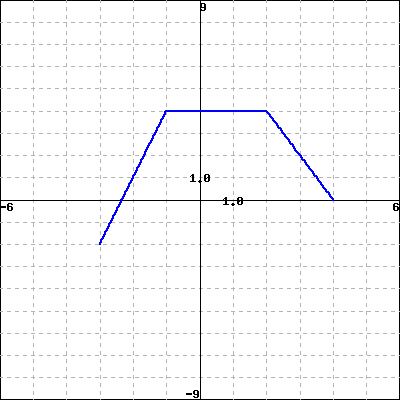
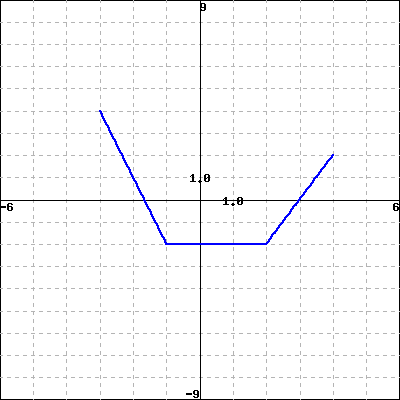
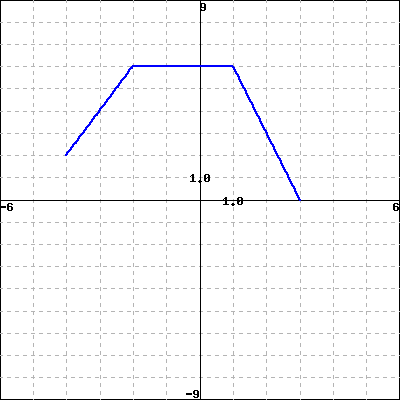
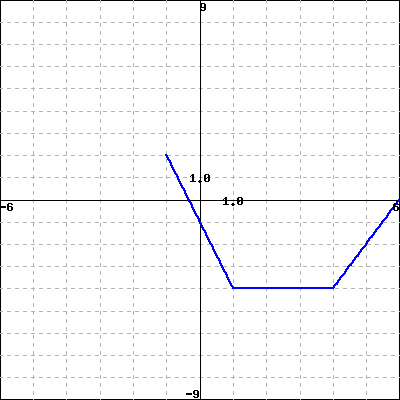
On each of these, it may be useful to sketch a pair of axes and plot the point. Then consider what would happen to that point for each transformation.
The graph of
\(y=f(x)\) contains the point
\((-6,1)\text{.}\)
a) If
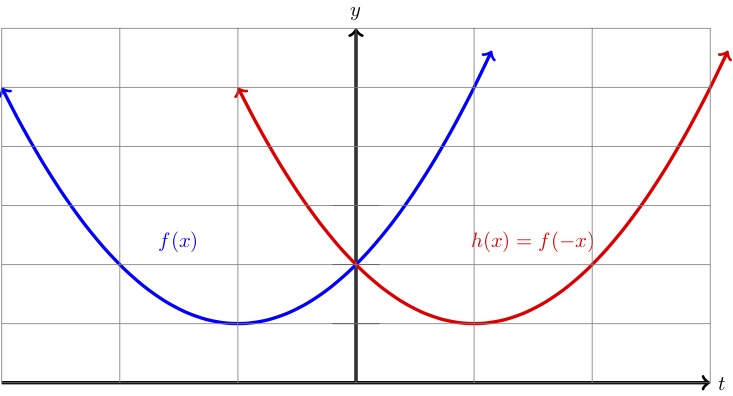
\(f(x)\) is reflected about the
\(y\)-axis, we would negate the input value.
b) If
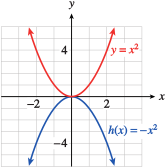
\(f(x)\) is reflected about the
\(x\)-axis, we would negate the output value.
c) If
\(f(x)\) is translated down 2 unit(s), we would subtract 2 from the output value.
d) If
\(f(x)\) is translated right by 1 unit(s), then we add 1 to the input value.
e) Consider if
\(f(x)\) is reflected about the
\(x\)-axis, then shifted up by 4 unit(s). Make sure you apply the transformations in the correct order. It may be useful to go step-by-step here.
f) Consider if
\(f(x)\) is translated up by 4 unit(s), then reflected about the
\(x\)-axis. Make sure you apply the transformations in the correct order. It may be useful to go step-by-step here.