Josh Brummer, Taran Funk, Lawrence Seminario-Romero, Ariel Setniker, Karina Uhing, Nathan Wakefield, Catherine Zimmitti, The Mabel Elizabeth Kelly Fund
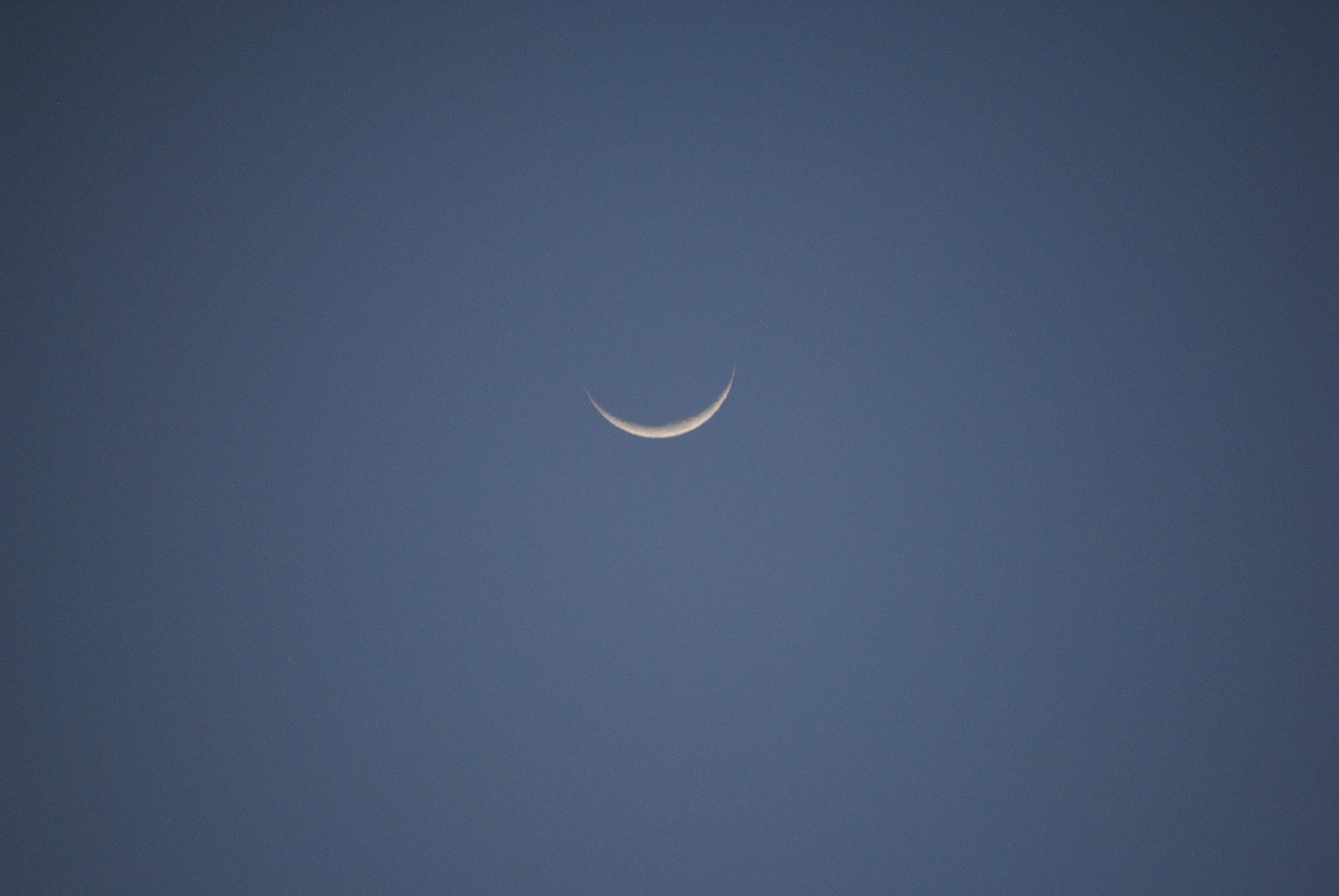
For thousands of years people have looked to the periodic nature of the phases of the moon. Early civilizations based their entire calendar around these predictable phases.
In fact, the surface area of the moon that is illuminated can be modeled by trigonometric function. If \(\theta\) is the angle formed between the sun, moon, and earth then the surface area of the moon that is illuminated is given by \(\frac{1}{2} \pi 1080^2 \left(1+ \cos \theta \right).\)
The above example is just one example of how trigonometry can be used. Other examples include additional astronomy, navigation and even music. In this chapter you will explore some of the tools used to apply trigonometry to the real world.